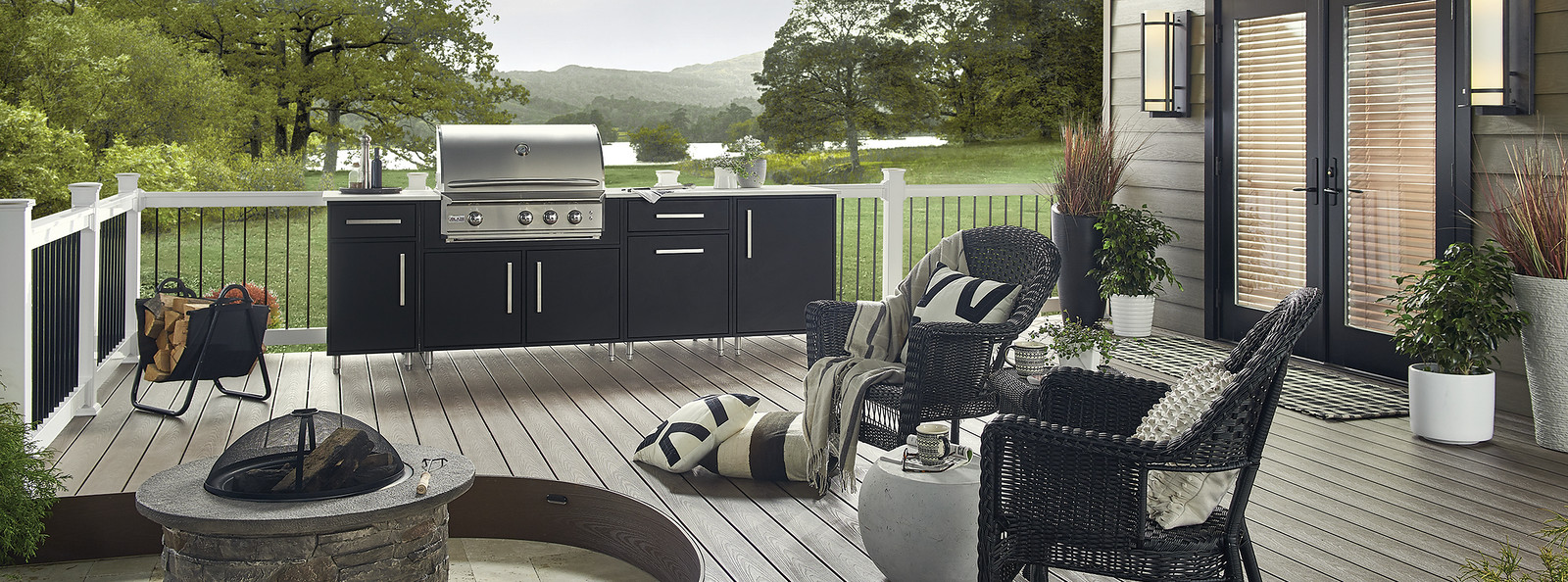

Choosing a suitable material can ensure your deck is a long-term and worthwhile investment. Decking materials can provide unique properties to match your needs. With the right options, you can elevate your property and get the most out of your outdoor space.
Materials like PVC and composite are popular choices, offering distinct features for different home styles, budgets and design goals. Understanding their features, advantages and disadvantages can help you decide on the right decking for your next project.
Use this PVC and composite decking comparison guide to get started.
PVC decking is a plastic material made from a synthetic polymer (polyvinyl chloride). It is durable, low-maintenance and resistant to wear and water. It’s also suitable for numerous climates and purposes like entertaining, relaxation and enhancing your property value.
Composite decking is a combination of plastic and wood materials. It can have visible polymer capping that protects the decking from wear and corrosion. This material can resemble natural wood and has various textures, grains and designs. It is also low maintenance and weather resistant.
Composite options don’t crack, fade or warp in the sun or rot in wet conditions. Capped composite decking can maintain its appeal for years.
When comparing PVC decking and composite options, each offers attractive features. One may suit your preference more. Weighing the pros and cons is an excellent way to select the best decking material for you.
Here are some pros of PVC decking:

Regarding potential cons, PVC tends to have a slightly higher price tag than composite decking options.
The pros of composite decking include the following:
The cons of composite decking are:
Choosing between composite and PVC decking can be challenging. Both offer numerous benefits, making them excellent solutions for any home. However, you want to select a material that provides a worthwhile investment according to your unique situation and preferences.
Comparing PVC and composite design and durability can help you make a more confident decision.
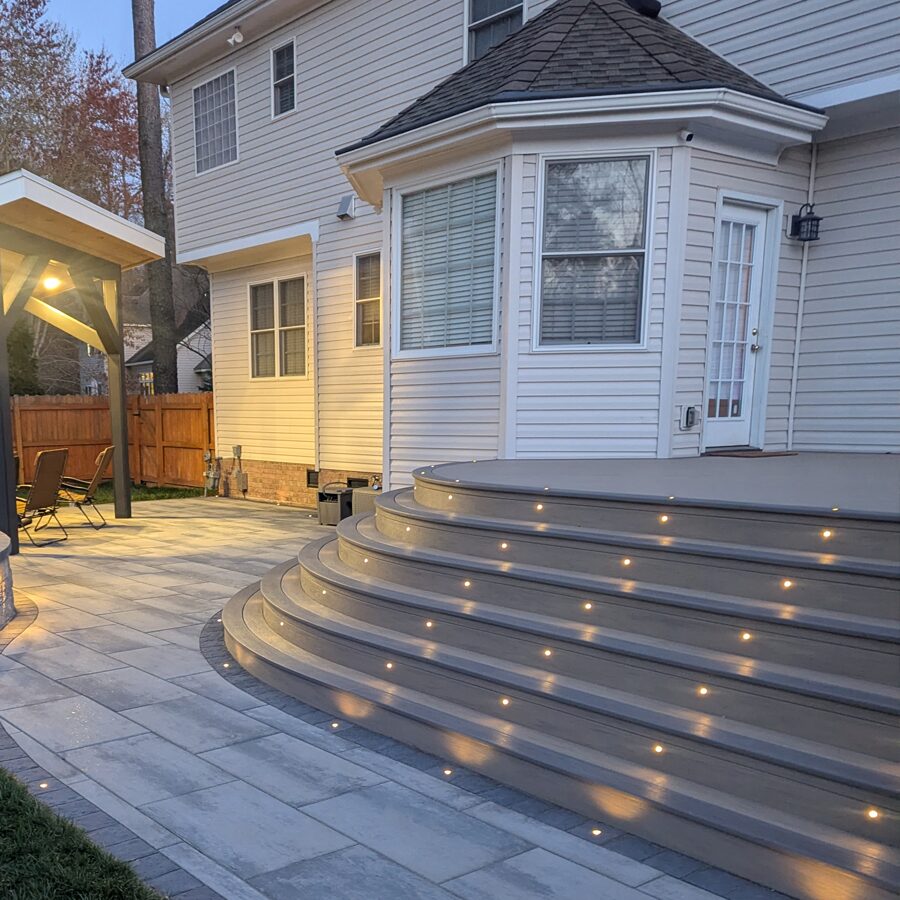
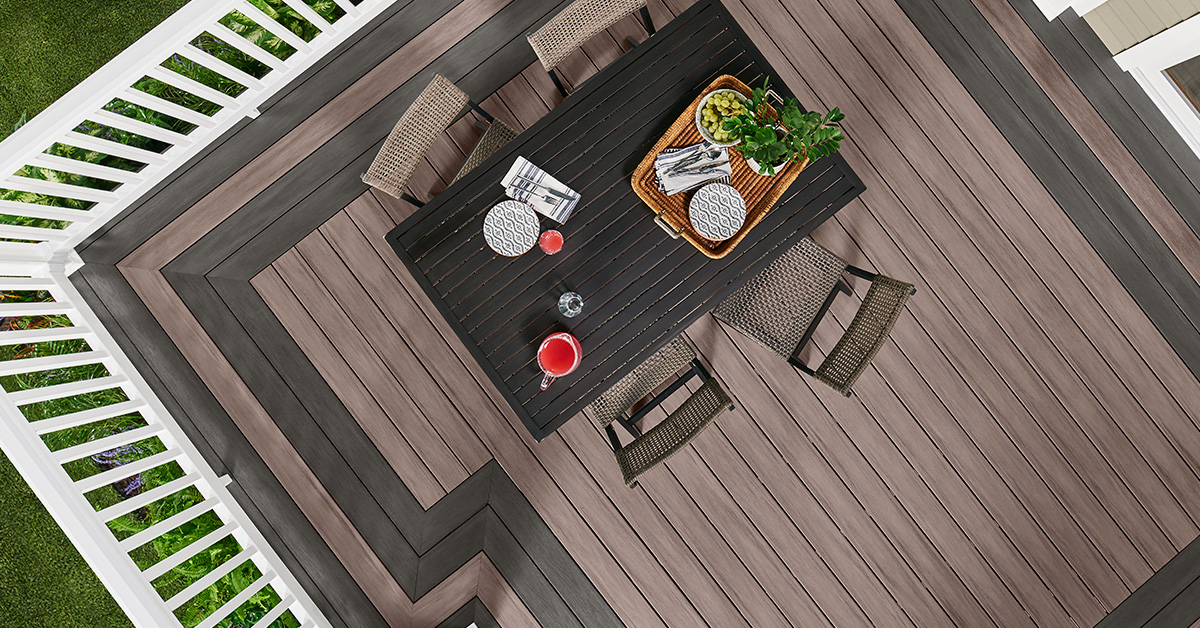
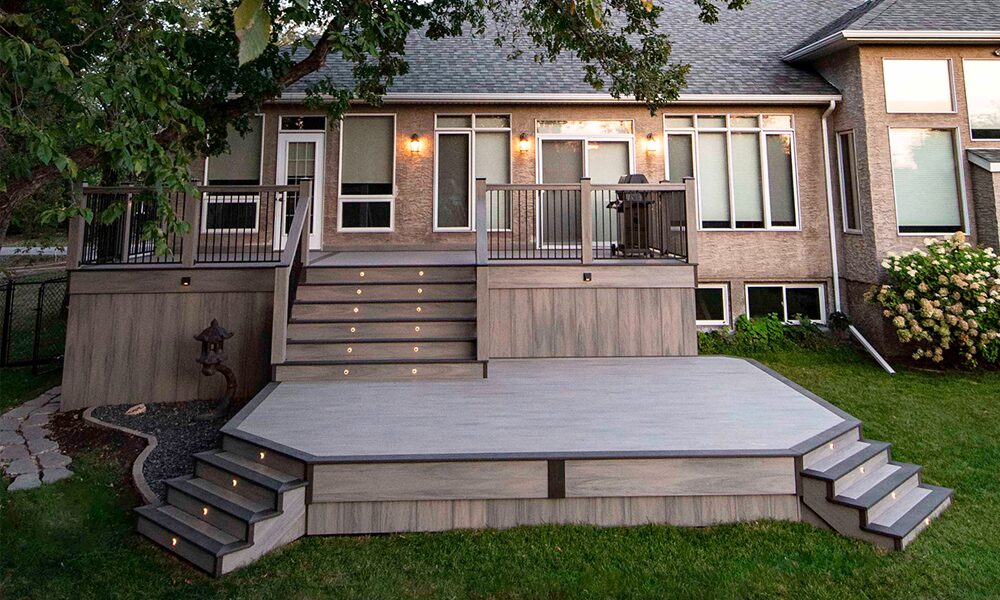
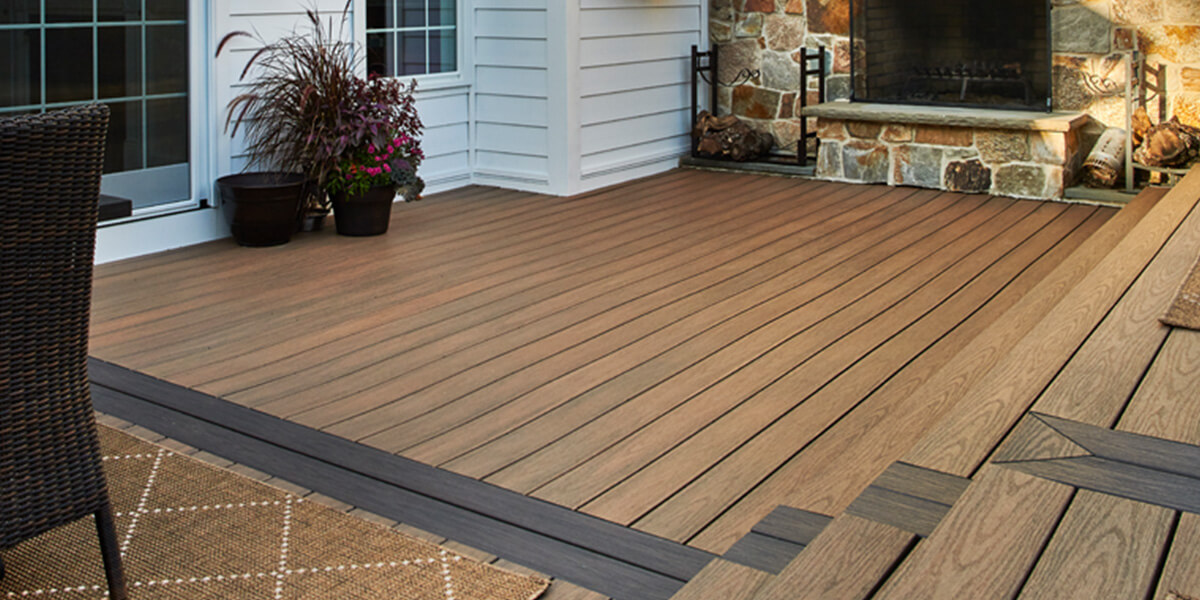
PVC and composite decking come in various colors, profiles and styles — including square edge and grooved boards — to match your home.

If you want a more realistic wood look, both materials are an excellent choice. You can find options resembling natural wood, like oak and cedar, which provide rich colors, grains and textures.
PVC decking offers a vast color palette with options for grays, golden browns and reddish browns. You can be as creative as you like and bring your vision to life with PVC decking — its boards can be specially curved or bent to create unique features, like waterfall steps.
While PVC and composite decking can be durable and last a lifetime, they have unique properties that suit different conditions.
Composite decking can absorb more moisture than PVC with its mix of organic materials, making it less mold resistant. In comparison, PVC decking offers maximum protection and is impervious to moisture. It can also cool down quicker in hot weather.
With no organic matter additives, PVC can last longer, while composite decking may require more maintenance to extend its lifespan.
As stated, your choice will depend on factors that are unique to your situation and preferences. Consider the following when making your final decision.
PVC decking can have a higher initial cost than composite. Regarding maintenance costs, composite decking may require you to invest more in keeping it clean and in good shape.
The amount you’ll spend on decking depends on various factors, including the size of your planned deck and how you plan to use it — more use leads to more wear.
Since both PVC and composite decking materials are low maintenance, either choice can be a great addition to your property. PVC decking requires minimal upkeep, so if you are searching for an easy-to-clean option, this may be the best pick for your home.
Consider your local weather conditions. If your region is prone to high humidity or precipitation, PVC may be the better choice since composite decking can absorb some dampness.
Also, assess where your decking will be positioned on your property. Will it be located near a swimming pool? Does the area receive full sun, or is it in a shaded part of your yard? Both materials are stain resistant, but PVC is especially great for avoiding unwanted marks or stains on your deck.
Either way, PVC and composite are some of the best decking materials on the market, and consulting and working with a professional team can help you assess your needs and make a beneficial choice.

At Wolf Home Products, we understand that everyone’s home is unique. That’s why we offer various premium decking materials. Select from our decking and porch products to transform your home’s outdoor space.
Our solutions are designed to resist the elements and provide your family with a deck you can enjoy, no matter the season. We offer generous 25- and 50-year stain and fade warranties on our products to protect your investment and give you greater peace of mind.
Questions? Visit our support page to get answers fast. Find a dealer near you to browse our selection and get started on your project.